Trump AI czar move puts regulation in market focus
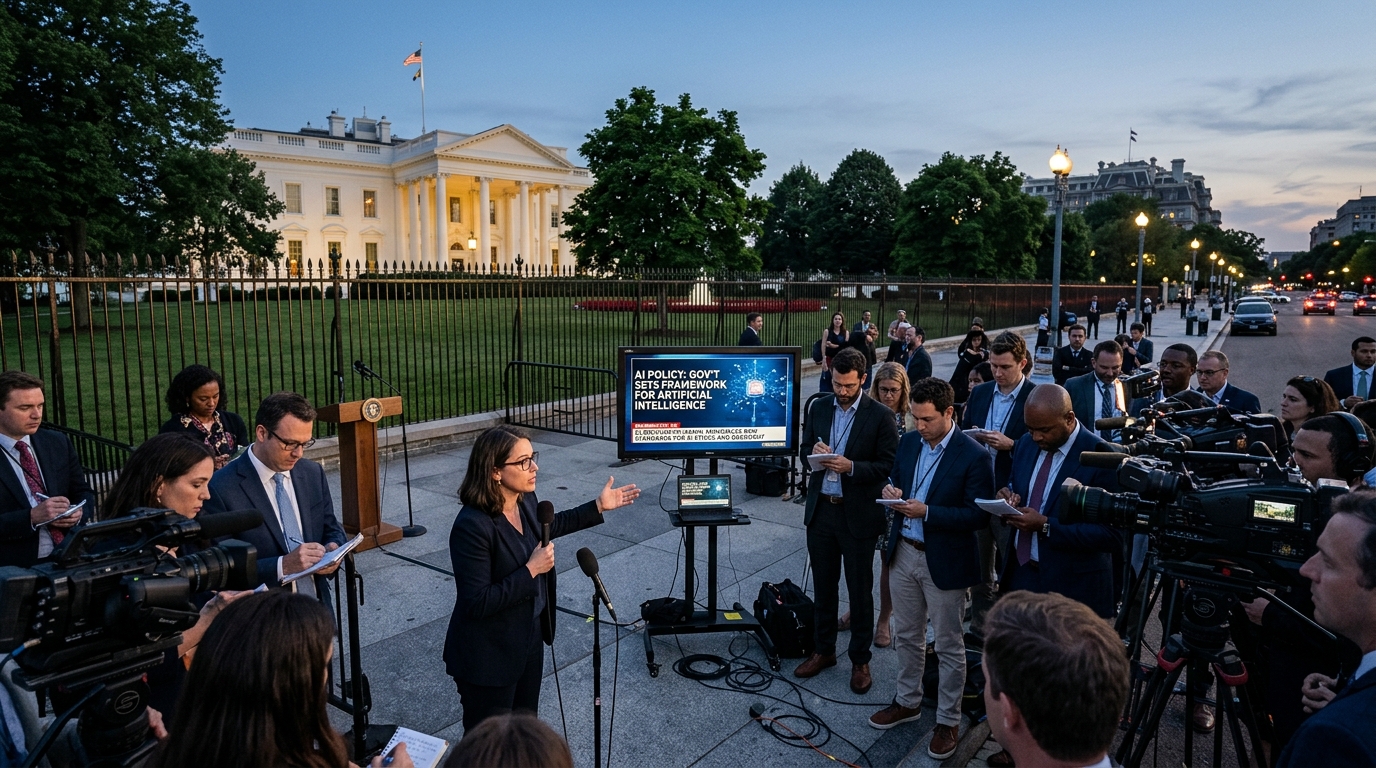
Artificial intelligence policy is emerging as a more direct market driver after multiple reports pointed to a stronger White House structure around the technology. The news flow matters because investors have spent much of the past year valuing AI companies primarily on product momentum, chip demand and infrastructure spending. Now, policy architecture itself is becoming part of the investment backdrop.
Two reports point to tighter AI oversight
CNBC, citing a Wall Street Journal report, said President Donald Trump is expected to appoint Director of National Intelligence Jay Clayton as AI czar. Cointelegraph separately echoed the same reported appointment. In a related headline, Investing.com, also citing the WSJ, reported that the White House has formed an AI task force to assess technology risks.
While the supplied headlines do not provide operational details, the overlap between the two reports is important. One points to a central figure for AI policy coordination; the other points to a formal process for evaluating risk. Together, they suggest the U.S. government is moving toward a more structured framework for supervising a technology that has until now largely been discussed through the lens of competition, computing demand and innovation leadership.
Why markets care now
This matters to equity markets because AI exposure is no longer limited to a narrow set of software names. The theme now cuts across semiconductors, networking, cloud services, cybersecurity, data-center construction and power infrastructure. CNBC also reported that America’s data center fight is a preview of what is to come for the rest of the world, underlining how AI demand is spilling into land use, energy supply and local permitting.
That means any sign of more centralized U.S. AI oversight could eventually matter not only for model developers, but also for companies supplying the hardware and physical footprint behind the AI buildout. Investors have been willing to reward growth and scale in those areas. A more policy-heavy environment could force closer attention to compliance, national security and operational risk.
National security framing may reshape the debate
The reported choice of Jay Clayton is notable because the role, as described in the headline, sits close to intelligence and state capacity rather than just commercial regulation. Even without additional detail, the framing implies AI is increasingly being treated as a strategic technology. That could affect how markets interpret future export controls, procurement priorities, cyber rules or guardrails around advanced systems.
Investors do not yet have enough confirmed information from the provided headlines to map specific winners and losers. But they do have enough to conclude that AI policy is moving beyond abstract debate. In market terms, that can shift focus from pure revenue growth toward execution under evolving rules.
Corporate and labor signals add context
The day’s AI-related headlines are arriving alongside signs of internal tension in the sector. Investing.com also reported that an OpenAI safety employee quit and criticized the company’s approach to AI risks. On its own, that is a company-specific personnel story. In context, however, it fits a broader pattern in which safety, governance and deployment standards are becoming more visible to the market.
At the same time, AI-linked competition remains intense. Yahoo Finance highlighted stories around AI chips, networking and optics, including a challenge to Nvidia’s networking moat and developments involving Intel, Micron, AMD, Lumentum and Corning. Those headlines suggest investor enthusiasm for AI’s commercial opportunity remains strong, even as policy scrutiny rises.
Data centers tie AI policy to the real economy
Perhaps the most important implication for broader markets is that AI regulation cannot be separated from infrastructure. According to CNBC, the U.S. fight over data centers offers a glimpse of future strains elsewhere. That places electricity, permitting, community opposition and industrial policy into the same conversation as software models and chips.
For investors, this broadens the field of relevant companies. The AI trade is no longer just about who builds the most powerful systems. It is also about who can secure power, navigate regulation and scale responsibly. That is why White House AI coordination matters beyond the largest technology platforms.
What to watch next
The next key variable is detail: whether the administration defines the AI czar role narrowly around coordination or more broadly around policy direction, and whether the task force signals specific actions affecting developers or infrastructure providers. The near-term outlook is neutral, but the market significance of AI governance appears to be rising.
MarketPro reports are AI-assisted analyses of publicly reported market news. Not investment advice.