Dollar surge pressures Asian FX as euro hits 17-month low
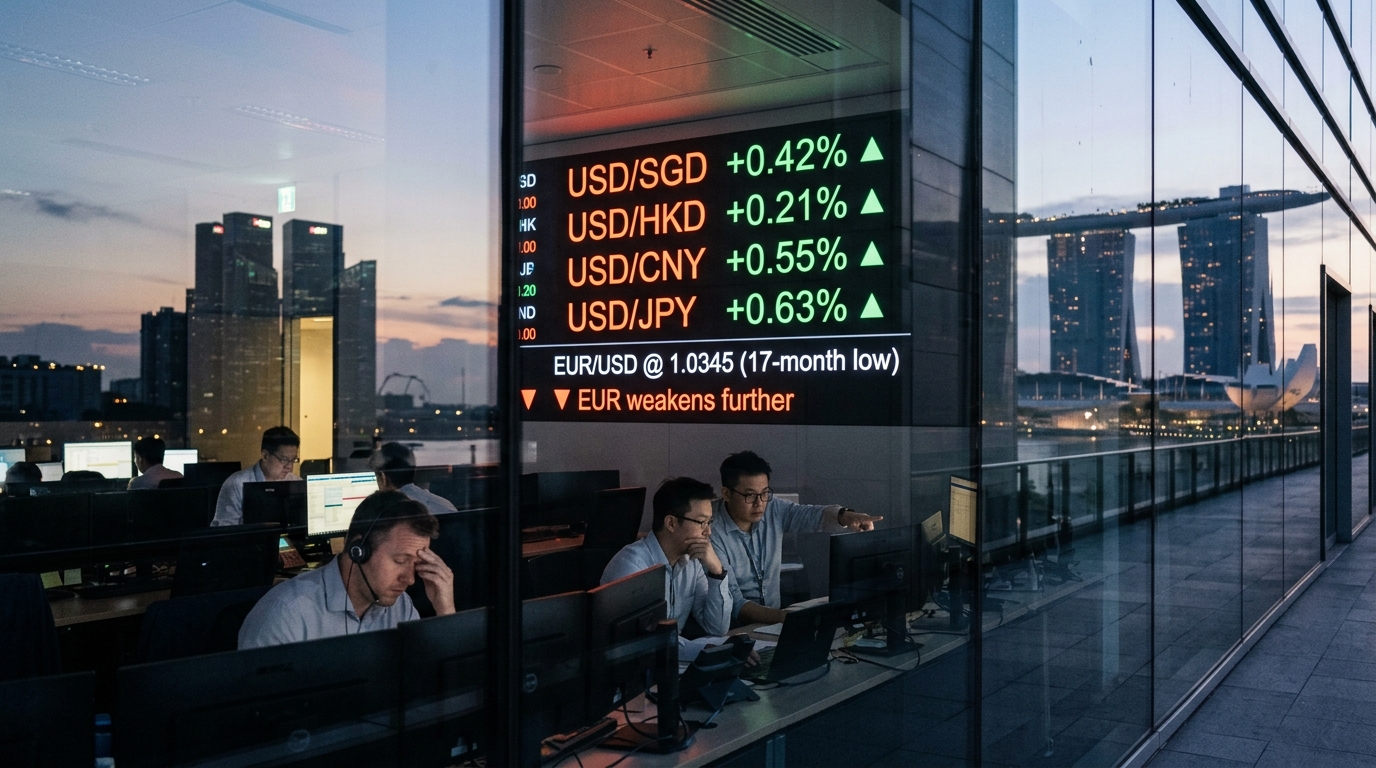
The U.S. dollar strengthened broadly in the latest trading session, pressuring Asian currencies and pushing the euro to a 17-month low, according to an Investing.com report. For global markets, the move matters because it links foreign-exchange stress to the same themes already driving cross-asset volatility: elevated U.S. yields, diverging growth expectations and uncertainty over the policy path ahead.
According to Investing.com, Asian currencies weakened as the dollar surged, while the euro touched its lowest level in 17 months. Even without a full set of country-by-country moves in the headline, the broad direction is important. A stronger dollar can tighten global financial conditions by making imports and dollar funding more expensive for economies and companies outside the United States.
Why the dollar move matters beyond FX
Currency markets often act as an early transmission channel for macro pressure. When the dollar rises quickly, the impact can spread into equities, commodities and sovereign debt. Import-heavy economies can face added inflation pressure through higher local-currency costs for energy and raw materials. Companies with dollar liabilities may also see debt-servicing burdens increase in domestic terms.
The move also lines up with the broader rates backdrop. A separate CNBC headline said surging Treasury yields do not yet signal a U.S. “fiscal apocalypse,” but the very fact that yields are elevated helps explain why the dollar has remained firm. Higher U.S. yields can increase the appeal of dollar-denominated assets relative to alternatives, especially when investors are already seeking liquidity and perceived safety.
Euro weakness adds a second layer
The euro’s slide to a 17-month low, according to Investing.com, adds to the significance of the dollar’s advance. A weaker euro can reflect concerns about relative growth momentum, interest-rate expectations or investor demand for safer reserve currencies. It can also feed into broader portfolio reallocation, especially when currency weakness coincides with fragile risk sentiment.
For multinational investors, the euro move is not just a regional issue. It affects returns on hedged and unhedged holdings, alters export competitiveness and can reshape expectations for central-bank communication in Europe if exchange-rate weakness starts to influence imported inflation.
Asian markets face the immediate pressure
In Asia, a stronger dollar tends to be watched closely because of the region’s trade exposure and the importance of imported energy. The pressure can be especially visible when commodity prices are sensitive to geopolitical risk. While today’s headlines do not provide fresh market-wide oil price data, the existing backdrop includes concern around Middle East shipping and tanker security, themes that can amplify the effect of currency weakness on local fuel costs.
That combination matters for policymakers. If local currencies weaken sharply while energy costs stay elevated, central banks can face a more difficult balancing act between supporting growth and containing imported inflation.
What traders will be watching
- U.S. yield direction: Dollar strength often intensifies when Treasury yields continue to climb.
- Central-bank signals: Markets will parse whether officials in Asia and Europe push back verbally against currency weakness.
- Risk sentiment: If global equities remain cautious, the dollar may keep its defensive appeal.
- Energy exposure: Import-dependent economies are more vulnerable when weaker currencies coincide with firm commodity prices.
A market signal, not a standalone story
The latest currency moves should be viewed as part of a broader repricing across global assets rather than as an isolated foreign-exchange event. According to Investing.com, the dollar’s rise and the euro’s 17-month low point to a market still centered on U.S. policy resilience and relative yield advantage. According to CNBC, Treasury yields may not yet imply a fiscal breaking point, but they are still high enough to shape global capital flows.
For investors and corporate treasurers alike, the key issue is whether this remains an orderly dollar advance or develops into a more disruptive tightening of financial conditions across regions. A stronger dollar can be manageable for a time; prolonged strength tends to test balance sheets, policy flexibility and market sentiment more broadly.
Neutral outlook: Near term, currency markets are likely to remain sensitive to U.S. rate expectations and any signs of official response in Asia or Europe, with the dollar’s direction continuing to influence broader risk appetite.
MarketPro reports are AI-assisted analyses of publicly reported market news. Not investment advice.