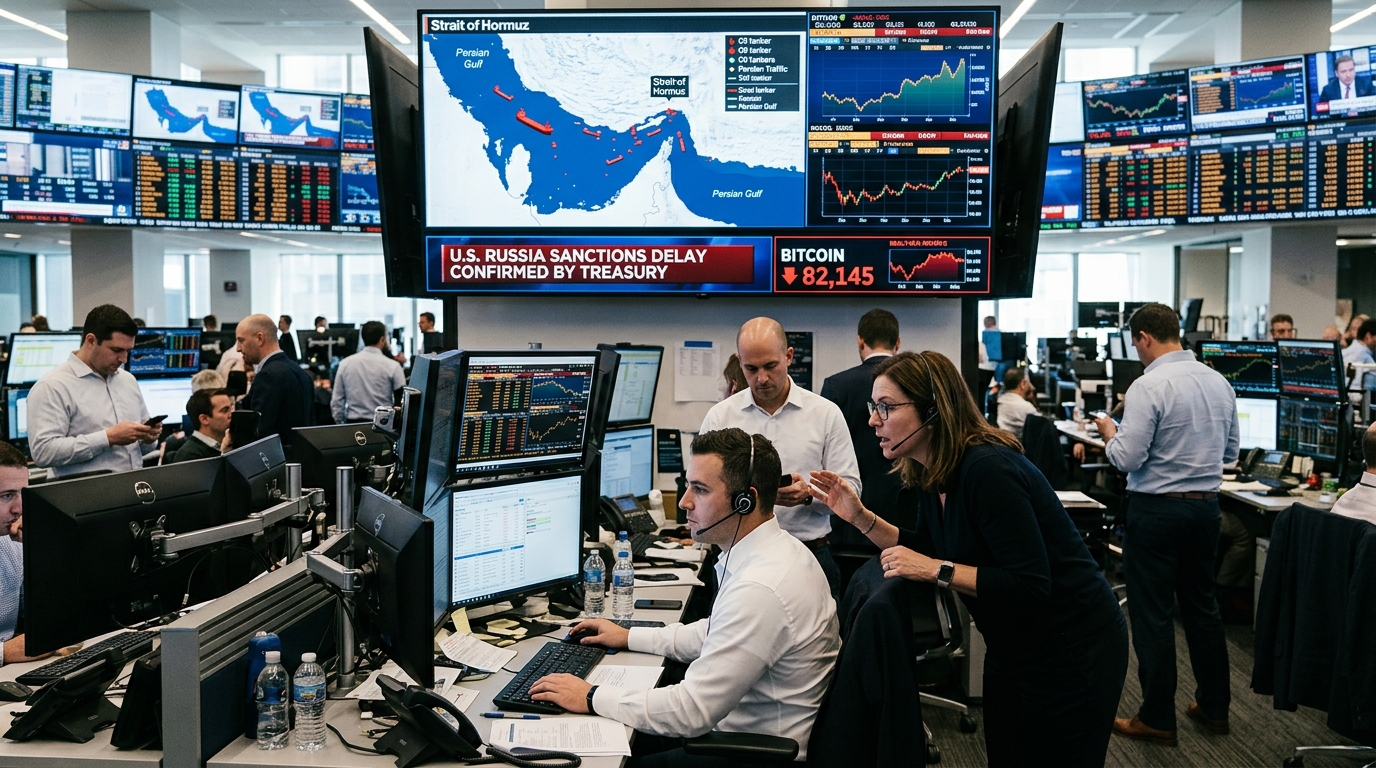
Trump sanctions waiver adds uncertainty to Russia policy
U.S. policy toward Russia moved back into focus after President Donald Trump waived broad new sanctions, a step that drew an immediate rebuke from Ukrainian President Volodymyr Zelenskyy and injected fresh uncertainty into the geopolitical backdrop investors are already navigating.
According to CNBC reports, Trump waived the new sanctions package, while Zelenskyy separately called the move “wrong.” Investing.com also reported Zelenskyy’s criticism, providing a second source for the latest development.
While neither headline detailed immediate market moves tied specifically to the decision, the policy shift matters because sanctions are not only a diplomatic tool; they can affect trade flows, energy markets, defense expectations and broader risk sentiment. For global investors, any change in the trajectory of Russia-related sanctions can alter assumptions about supply chains, commodity exports and the durability of Western policy coordination.
Why markets pay attention to sanctions policy
Sanctions decisions can influence markets through several channels. The first is commodity exposure. Russia remains a major player in global energy and raw materials, so any sign of easing or tightening in U.S. policy can reshape expectations for supply disruptions and price volatility.
The second channel is political risk. A waiver of broad new sanctions may be interpreted by markets as a sign that Washington’s approach could become less predictable or more transactional. That matters not just for Russia-linked assets, but for companies and sectors exposed to cross-border regulation, shipping, insurance and energy logistics.
The third channel is alliance cohesion. Zelenskyy’s public criticism highlights possible friction between Kyiv and Washington over the next phase of economic pressure on Moscow. Investors often watch such disagreements closely because they can affect the timing and scope of future policy actions from the U.S. and its allies.
A geopolitical story with economic spillovers
The waiver does not automatically translate into an immediate shift in trade or capital markets, and the headlines available do not say that it has. But it does reopen questions about how firmly the U.S. intends to maintain or escalate economic pressure on Russia.
That uncertainty comes at a time when geopolitical shocks are already feeding into market thinking. CNBC separately reported that airport attacks have put aviation in the crosshairs of geopolitical conflicts, underscoring how security developments can quickly spill into transportation, insurance and travel-related risk pricing. Even when these are separate stories, they reinforce the same broader message: geopolitical instability remains an active market variable rather than a background issue.
For Europe, the sanctions question is especially sensitive because economic policy and security policy often overlap. Energy costs, industrial competitiveness and fiscal burdens tied to defense and reconstruction all remain part of the wider macro picture. A perceived softening in U.S. sanctions posture could therefore be read through several lenses at once.
What is confirmed — and what is not
Based on the available wire headlines, two points are clearly supported:
- Trump waived broad new Russia sanctions, according to CNBC.
- Zelenskyy condemned the decision as “wrong,” according to CNBC and Investing.com reports.
Beyond that, caution is warranted. The provided headlines do not specify the exact legal mechanism of the waiver, the sectors most directly affected, or whether allied governments plan a coordinated response. They also do not indicate an immediate move in oil, currencies or equities directly attributable to the sanctions decision.
That means the story, for now, is less about measured market impact and more about a renewed layer of policy uncertainty. Investors tend to reassess geopolitical assumptions when leaders send conflicting signals over sanctions, and that reassessment can matter even before concrete economic effects appear.
Why this matters now
Markets have been balancing inflation, rates and growth concerns alongside a steady stream of geopolitical developments. In that environment, sanctions policy can influence sentiment disproportionately because it touches multiple asset classes at once. Even without a same-day price shock, a change in U.S. posture toward Russia can alter how investors think about European exposure, energy-sensitive industries and global risk premiums.
For policymakers, the episode also shows how headline-level diplomatic tension can quickly become part of the market narrative. Public criticism from Zelenskyy ensures the decision will be debated not only in political circles but also among investors assessing whether transatlantic alignment is holding firm.
Neutral outlook: The immediate economic effects remain unclear from current reporting, but the waiver adds a new source of geopolitical uncertainty that markets are likely to monitor across energy, Europe-focused assets and broader risk sentiment.
MarketPro reports are AI-assisted analyses of publicly reported market news. Not investment advice.