Intel Rout Deepens Pressure Across Chip Stocks
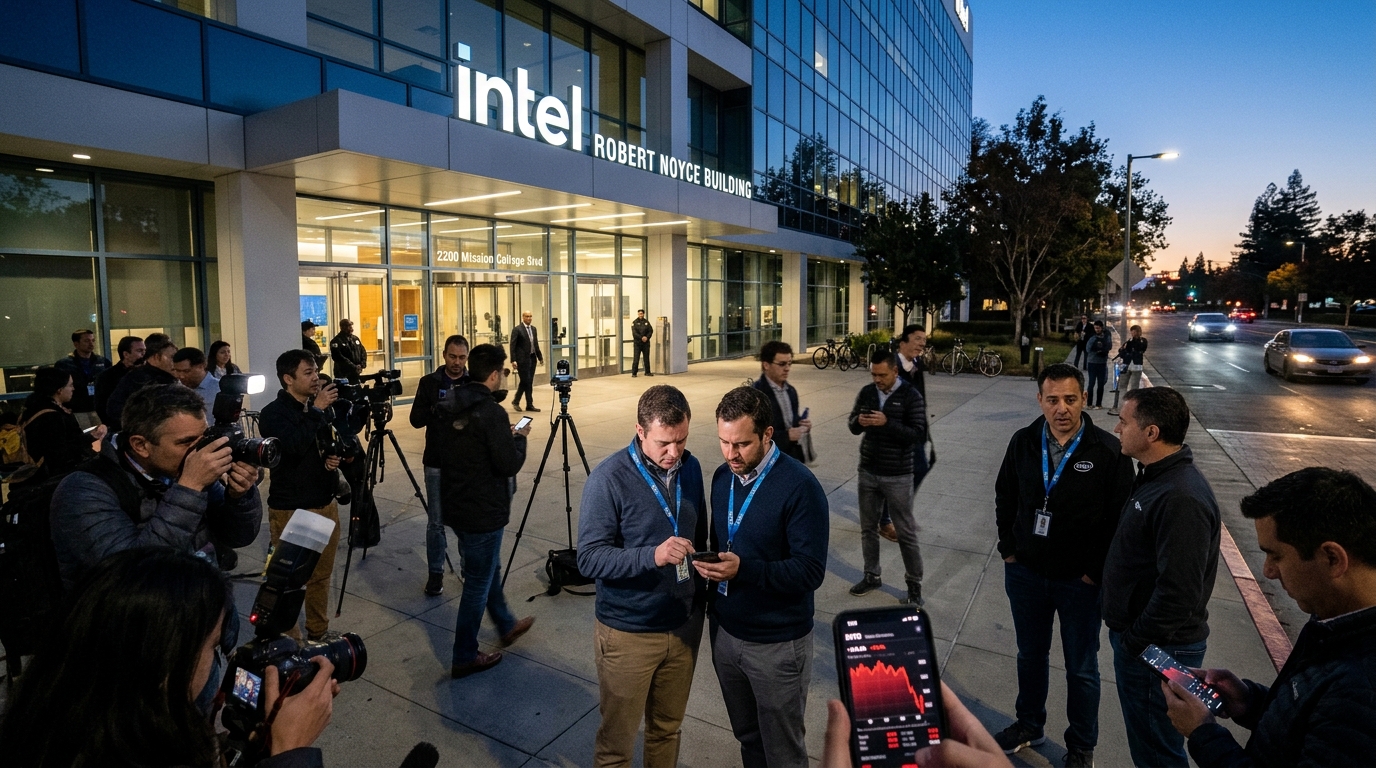
Intel's selloff emerged as one of the clearest single-stock shocks of the session, with CNBC reporting that the shares had their worst day since the 1970s and MarketWatch describing it as the company's worst day in decades. Together, the reports point to a move that resonated far beyond one earnings reaction, adding to broader pressure on technology and semiconductor names.
CNBC said the plunge erased about $12 billion from the U.S. government's stake, underlining the scale of the move. MarketWatch, meanwhile, framed the rout as part of a much larger destruction of market value and linked the slide directly to investor concern over Intel's outlook and positioning. While the two reports used different reference points, both confirmed that the drop was historic in magnitude and unusually important for market psychology.
Why the market reaction mattered beyond Intel
The significance of the move was not only the size of the decline but what it suggested about investor tolerance for execution risk in the chip industry. Semiconductor stocks have been central to equity-market leadership, and sharp reassessments in a major name can quickly affect valuations across the group.
MarketWatch separately reported that AMD shares fell after Intel earnings revealed what it called two big issues. That cross-stock reaction matters because it suggests investors were not treating Intel's problems as fully isolated. Instead, they appeared to be asking whether demand conditions, pricing pressure or competitive dynamics could spill into peers.
This kind of read-through is important in a market already sensitive to earnings quality, capital intensity and the durability of technology spending. Even when company-specific factors dominate an initial move, spillovers into rivals can reshape sentiment for the whole sector.
Semiconductor leadership is being tested
The chip sector has occupied a special place in recent market leadership, so abrupt weakness in a legacy bellwether carries symbolic weight. MarketWatch also published a broader piece asking whether the Nasdaq's rough ride looks eerily like 2000, showing that investors are increasingly debating whether recent technology volatility is cyclical, valuation-driven or something more structural.
That does not mean Intel's collapse alone defines the market's next phase. But it does mean investors are paying closer attention to companies that must prove they can protect margins, fund strategy shifts and compete in a rapidly changing semiconductor landscape.
The wider context also matters. Investing.com reported that Wall Street closed sharply lower as fears around AI cash burn sparked a tech selloff. While that headline was broader than Intel alone, it helps explain why the market may have reacted so harshly to any sign of weakness in a large technology company. In an environment where investors are already questioning spending efficiency and future returns, disappointing signals can produce outsized stock moves.
What Intel's slide signals for the broader market
Intel's drop is notable because it combines company-specific disappointment with sector-level implications. Large declines in heavily followed technology names can tighten financial conditions inside equity markets by making investors more selective, reducing risk appetite and intensifying scrutiny on forthcoming earnings across semiconductors and software alike.
There is also an index effect. Major chip stocks influence broader benchmarks, and sharp falls can weigh on headline sentiment even for investors with little direct exposure to a single company. That helps explain why stories like Intel's often become market stories rather than remaining confined to one stock.
- First, the scale of the decline showed investors were willing to rapidly reset expectations.
- Second, peer weakness indicated broader semiconductor concerns.
- Third, the move landed during an already fragile period for technology shares.
According to CNBC and MarketWatch reports, Intel's collapse now stands as one of the session's defining events. For markets, the key issue is less the historical label attached to the drop than whether it marks a contained repricing or the start of a wider reassessment of chip-sector leadership.
Neutral outlook: The next signal for investors will likely come from how rival semiconductor stocks trade after the initial shock and whether upcoming results reinforce or challenge the broader concerns exposed by Intel's selloff.
MarketPro reports are AI-assisted analyses of publicly reported market news. Not investment advice.