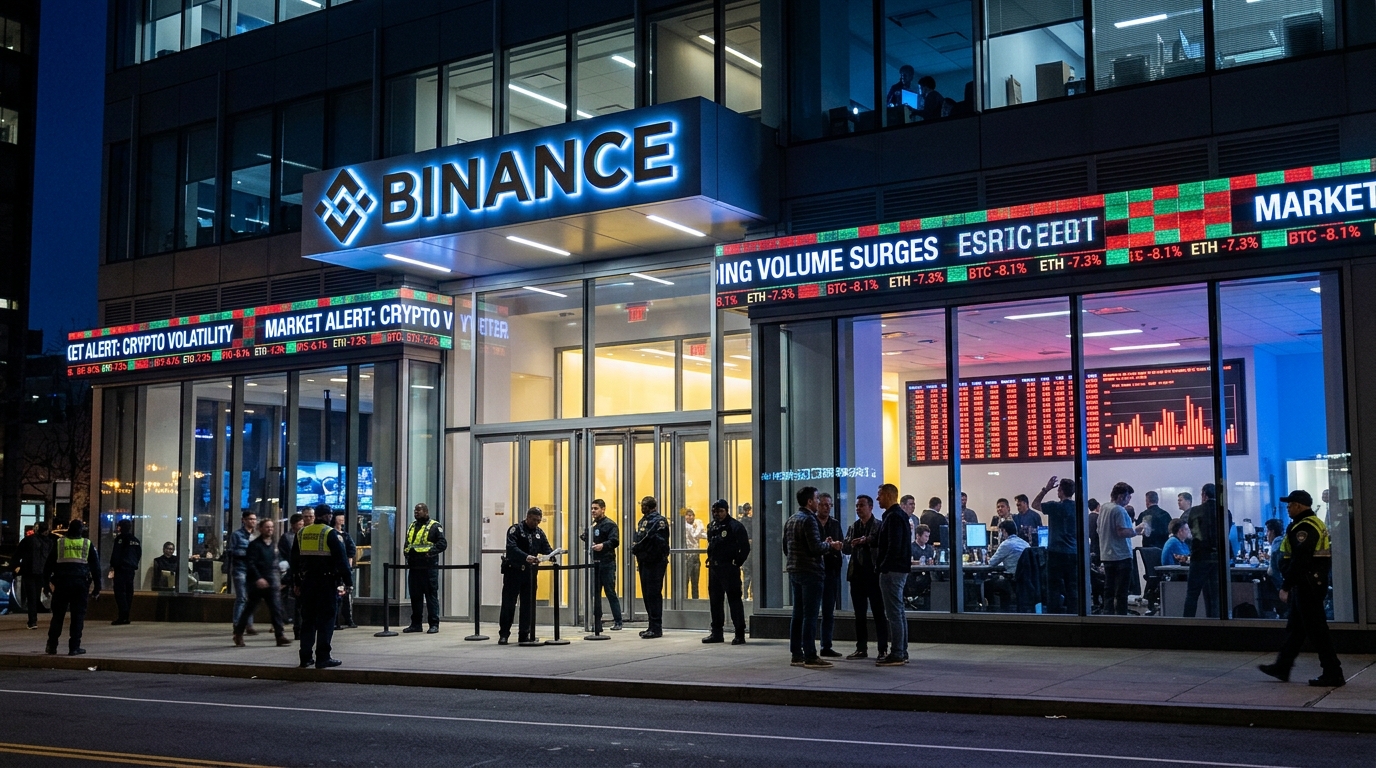
Binance Hack Puts Crypto Security and Politics in Focus

A reported $6.3 billion hack affecting Binance has quickly become one of the biggest crypto security stories of the year, with implications far beyond one exchange. Across coverage from CNBC, Cointelegraph and Investing.com, the episode is being framed not only as a test of exchange security and wallet design, but also as a fresh political and regulatory flashpoint for the digital-asset industry.
According to CNBC, the scale of the hack has raised immediate questions about crypto wallet safety. Cointelegraph separately reported that hackers moved rapidly to shift funds before they could be frozen, while Investing.com said bitcoin held above $77,000 even as the FBI joined efforts to track the attackers. Taken together, those reports suggest the market impact is significant but more nuanced than a simple broad-based panic.
Why this incident matters beyond Binance
Large exchange hacks have historically mattered because they touch several layers of the crypto market at once: user confidence, counterparty risk, technology architecture and policymaker scrutiny. In this case, the story is also arriving at a moment when digital assets are already deeply tied to U.S. politics.
CNBC reported that the crypto industry has poured more than $200 million into the 2026 midterm elections in an effort to pressure Congress toward favorable rules. Cointelegraph also described political clashes emerging around the Binance breach. That combination matters for markets because every major security failure tends to strengthen arguments from critics who say the industry still relies on infrastructure that can be fragile under stress.
For investors and market participants, the key issue is not only the direct losses. It is whether the hack reshapes the regulatory timetable, changes compliance costs for exchanges and custodians, or alters how quickly mainstream institutions are willing to expand their crypto exposure.
What the price reaction may be signaling
One notable feature of the early reaction is that crypto-linked equities appear to have taken a clearer hit than bitcoin itself. Cointelegraph reported that Coinbase led a crypto stock selloff following news of the Binance hack. That distinction can matter.
When a major operational or security shock lands, listed crypto companies can become a more immediate outlet for repricing because they carry business-model risk, legal risk and earnings risk in a way that the underlying tokens do not. If traders believe security incidents could bring tougher rules or slower customer growth, equities tied to exchange volumes or custody activity may feel the pressure first.
At the same time, Investing.com said bitcoin remained above $77,000, indicating that at least part of the market may be treating the incident as exchange-specific rather than as an existential problem for the asset class. That does not eliminate risk, but it may help explain why the response has not looked like a uniform liquidation across all digital assets.
Wallet safety returns to center stage
The most durable consequence may be a renewed focus on how assets are stored and protected. As CNBC highlighted, the event is raising basic questions about wallet safety. Those questions can ripple through:
- Exchanges, which may face demands for stronger safeguards and clearer disclosure.
- Custodians, which could see greater scrutiny from institutions and regulators.
- Blockchain analytics firms, whose tracing tools become central after attacks.
- Users, who may reassess where and how they hold digital assets.
That theme gained another layer with Cointelegraph's report that blockchain investigator Chainalysis was itself hit by a cybersecurity incident. While the two situations are distinct, the overlap in headlines reinforces a broader market concern: crypto security is not a niche technical issue but a systemic one touching exchanges, analytics and law enforcement.
Political consequences could outlast the market shock
The timing may prove especially important. With crypto lobbying and campaign spending already under the microscope, a record-scale hack gives both supporters and critics of the industry more material heading into the U.S. election cycle. Supporters may argue the answer is clearer regulation and better standards. Critics may say the episode shows the sector still presents outsized risks to consumers and the financial system.
Either way, regulation now looks even more likely to remain a market-moving variable for crypto prices, exchange valuations and public companies tied to digital-asset activity.
Neutral outlook
The immediate focus will remain on tracing funds, assessing security failures and measuring any fallout for crypto-linked equities. Based on reports from CNBC, Cointelegraph and Investing.com, the bigger market question is whether this stays a major but contained exchange incident or becomes a catalyst for broader regulatory and confidence shifts across the crypto sector.
MarketPro reports are AI-assisted analyses of publicly reported market news. Not investment advice.